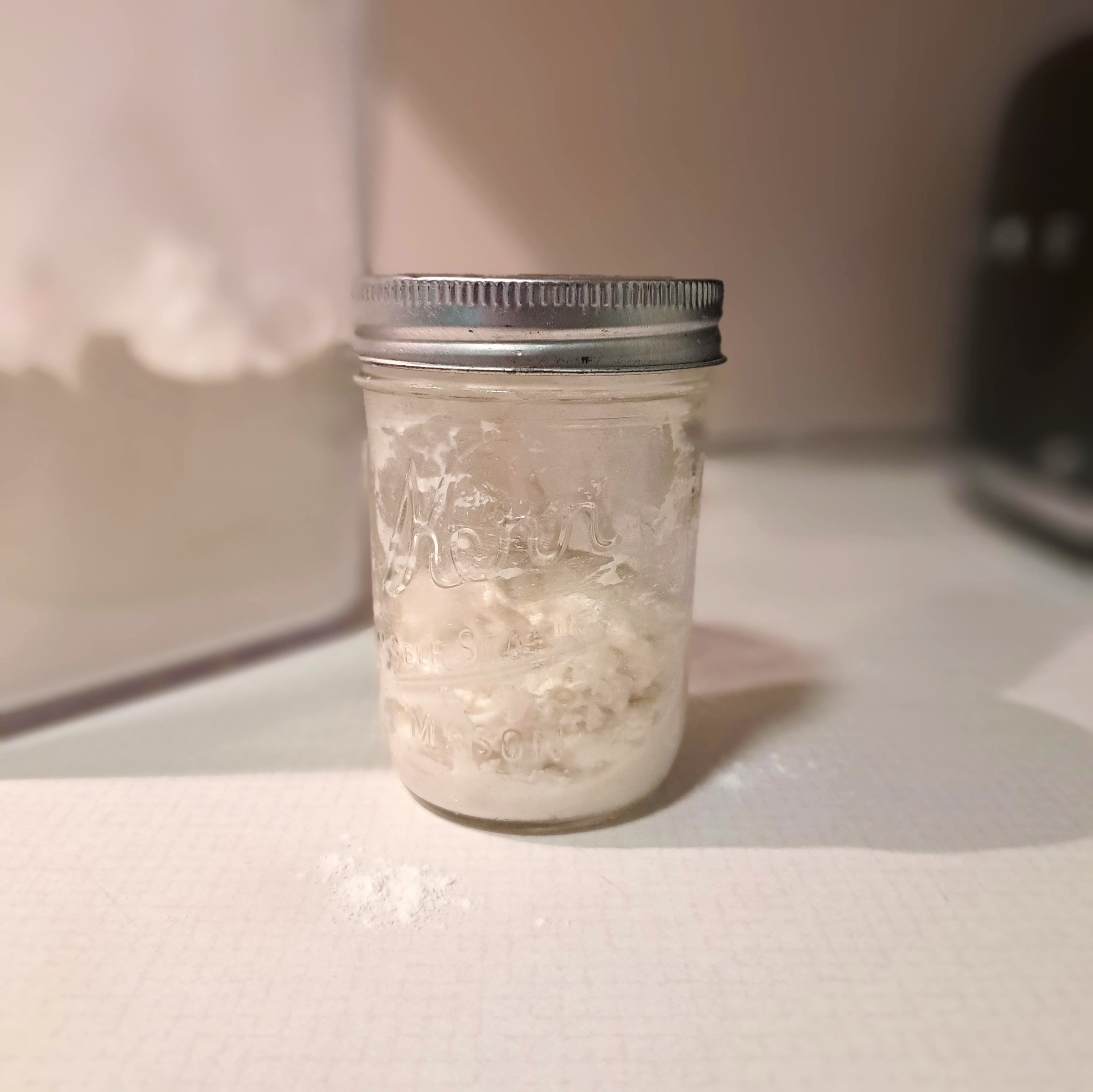
So you’re headed out of town and you’re wondering what to do with your needy sourdough starter. You’re nervous you might “kill” it, or maybe you think you already have. Well, take heart, if you’ve been maintaining your starter for awhile you can 1) very easily “put it to sleep” for a long time and 2) most likely haven’t “killed” it.
A lot of folks seem to over-complicate sourdough starter. You will come to realize that as you get more and more comfortable with your starter – how quickly it grows, what it looks and smells like, how to feed it without measuring – it is quite easy to leave home for as long as you’d like and revive your starter quickly.
Headed Out of Town
Maybe it’s your first time leaving home since you’ve started Sourdough and you’re feeling unsure about what to do with your beloved starter. You’ve probably heard some people say they have “killed” their starter; and after all the time, effort, research, and resources you’ve dedicated to your starter you don’t want to “kill” your starter just by going on vacation. But, you also don’t want to take your starter with you on vacation. So what do you do?
It’s simple! Put about 10 grams of starter in a glass jar, feed it with 60 grams of all-purpose flour and 50 grams of filtered water, and stir it all together.


Now seal a lid on your jar and place it in the refrigerator. Feeding your sourdough starter, sealing the lid, and placing it in the refrigerator gives your starter the ideal environment to keep feeding on something slowly while you’re away. Sealing your jar combined with the cold air from the refrigerator immensely slows down growth.


Did I Kill My Starter?
Maybe, but probably not! I’ve got some good news for you – sourdough starter is hardy. You may be thinking, “no, you don’t get it I’m the exception, my starter isn’t doing a thing and I’ve been so consistent!” But, I do get it because I’ve was there once too.
If you’re just starting a new sourdough starter, stick with it. Keep on going with a regular feeding schedule and consistent feeding ratios. If you have more questions about troubleshooting your Sourdough starter, check out my blog post All About Your Starter.
If you have a starter that was active at one point, and maybe you left on vacation, or maybe you have noticed your starter activity slow down or stop completely, there’s not need to worry. My bits of advice are:
- First of all, do what you can to feed your starter with filtered water
- Make sure to keep up with a regular feeding routine and ratios. Try this for another 4-5 days and if you still don’t notice any activity…
- Try making a rye flour + all-purpose flour blend to feed to your starter. For every 1 gram of rye flour, add 10 grams of all-purpose flour. I like to fill a container with 20 grams of rye flour and 200 grams of all-purpose flour, shake it up to mix it all together, then use that flour blend for consistent feedings over the next week…
- Once your starter is consistently bubbly again, transition back to feeding your starter with all-purpose flour. You don’t have to feed your starter only with all-purpose flour, but it is a slower activity flour for feeding. This means you won’t need to feed your starter as much or as often. Flours like wheat flour and rye flour speed up your starter activity immensely!
Reviving Your Sourdough Starter When You Get Home
So now you are ready to pull your starter out of the refrigerator and get back to baking! Yay! Your starter will have different characteristics depending on how long your fermenting friend sat in the fridge.
If you were only away for a few days, simply pull out your starter from the fridge, discard some, and resume your feeding schedule. But if you were away for an extended period of time, or maybe your starter has been in the fridge for months, and you notice liquid on the top of your starter, continue reading…
My Starter has Liquid on the Top
The liquid on top of your starter is called hootch, it has a strong smell but it’s nothing to worry about. Pour this liquid down the drain, discard some of your starter, and resume your regular feeding schedule. Depending on how long it’s been since you’ve fed your starter, it may take a few days to notice regular activity again.
My Starter has Mold on the Top
Maybe your starter got lost in the back of your fridge for a few months and you’ve pulled it out and notice mold on top. If there is a surface amount of mold on top of your starter, use a spoon to scrape all of the mold and some of the starter below out, and throw this away. Then resume regular feedings to bring your starter back to life. You’ll be amazed at how hardy Sourdough starter is!
Warning: Ultimately, in the situation of mold, your better judgement is important. If there is a lot of mold, it may be best to just throw your starter away and begin all over – find my “Making Starter From Scratch” directions here.
I never want to be responsible for anyone getting sick from using a starter that was too far gone – so be safe and bake on!
Here’s a little secret: On occasion, when I am in a rush, I have placed about 20 grams of starter in a jar and sealed a lid on top and simply placed it in the refrigerator without feeding it anything! When I pull it out a few days (even a week) later, and feed it, the starter returns to its bubbly self in no time.
Don’t feel like making your own starter from scratch? Did you know I have dehydrated Sourdough starter for sale in my Shop? Hop on over there to jump start your Sourdough journey!
Leave a Reply